ST. LOUIS, MO – November 14, 2026 (StLouisRestaurantReview)America’s restaurant industry is approaching 2027 with some of its most recognizable brands undergoing major changes. Hundreds of restaurant closures, declining sales, franchise bankruptcies, corporate restructuring, and ownership transitions are reshaping an industry that has traditionally relied on customer loyalty and familiar national names.
The challenges are affecting everything from fast-food hamburger chains to traditional family restaurants and casual-dining establishments.
Some companies are reducing their restaurant networks to improve profitability. Others are recovering from bankruptcy or transferring restaurants to new owners. One familiar restaurant concept is being eliminated entirely.
For consumers, the changes can mean losing restaurants they have visited for decades. For employees, franchise operators, and restaurant owners, the consequences can be much more significant.
Food costs, labor expenses, insurance, commercial rent, financing obligations, and changing consumer spending habits all influence whether a restaurant can operate profitably.
Even major national chains with extensive marketing resources and sophisticated purchasing systems are finding that some locations can no longer generate adequate returns.
The following nine restaurant chains illustrate the challenges facing the industry as 2027 approaches.
This countdown examines documented closures, financial developments, and corporate restructuring decisions. It is not a prediction that all nine companies will declare bankruptcy or disappear.
9. Wendy’s: Declining Sales and a Major Turnaround
Wendy’s remains one of America’s largest hamburger restaurant chains, but its latest financial results demonstrate the challenges facing traditional fast-food operators.
On November 5, 2026, The Wendy’s Company reported third-quarter global systemwide sales of about $3.3 billion, down 5.9% from the comparable period in 2025.
U.S. systemwide sales declined 7.6%, while comparable U.S. restaurant sales fell 5.7%.
The company reported quarterly revenue of $547 million and net income of $15.1 million.
That compared with net income of $44.3 million during the same quarter in 2025.
Although Wendy’s remained profitable, the decline in earnings illustrates the financial pressure affecting its domestic business.
The company has introduced a multiyear turnaround strategy called Dave’s Way, designed to improve customer traffic, strengthen restaurant profitability, and increase market share.
Wendy’s has also been evaluating changes within its franchise network.
In November, management disclosed a letter of intent to acquire up to 163 restaurants associated with Meritage Hospitality Group and its lenders.
The potential transaction remained subject to definitive agreements, competing offers, and court approval.
Wendy’s faces a challenge familiar throughout the fast-food industry.
Customers who once considered hamburger chains inexpensive alternatives to full-service dining are increasingly comparing restaurant prices with groceries, convenience-store meals, and competing promotional offers.
Wendy’s must rebuild traffic while balancing affordability, operating expenses, and franchise profitability.
The 2027 outlook: Wendy’s must demonstrate that its turnaround strategy can reverse declining domestic sales. Its financial results do not establish that the company is approaching bankruptcy.
8. Noodles & Company: Restaurant Closures and Debt Pressure
Noodles & Company is undergoing significant restructuring, but its latest financial results also reveal improvements in restaurant performance.
On November 13, 2026, the company reported 9.5% systemwide comparable-restaurant sales growth for the third quarter.
Comparable sales increased 10.7% at company-operated restaurants and 4.9% at franchised locations.
Total quarterly revenue declined 1% to $120.9 million.
However, the company’s net loss narrowed from $9.2 million during the comparable 2025 quarter to $2.1 million.
Adjusted EBITDA increased 34.3% to $8.7 million.
These results demonstrate that a restaurant company can improve the performance of its remaining locations while simultaneously reducing its overall footprint.
Noodles & Company continues closing underperforming restaurants.
Management’s updated 2026 outlook calls for approximately 34 to 36 company-operated restaurant closures and seven to eight franchised restaurant closures.
The company has also been addressing its financing obligations.
As of September 29, 2026, Noodles & Company reported approximately $101 million in outstanding debt and $1.5 million in cash and cash equivalents.
On November 12, the company amended its credit facility, extending the maturity date to November 30, 2027.
The extension provides additional time to address financing obligations.
Management has also been reviewing strategic alternatives, including refinancing, refranchising, selling part or all of the business, and other potential financial transactions.
No particular transaction has been guaranteed.
The 2027 outlook: The company’s debt obligations, strategic review, restaurant closures, and ability to generate sustainable positive cash flow will be important indicators of its future.
7. Jack in the Box: Closures Could Continue Into 2028
Jack in the Box has been implementing a restructuring strategy known as Jack on Track.
The program includes closing underperforming restaurants, improving operations, and strengthening the company’s financial position.
The company previously identified approximately 150 to 200 underperforming restaurants for potential closure under its broader turnaround program.
According to its fiscal third-quarter 2026 financial filing, Jack in the Box closed 40 restaurants through July 5 of that fiscal year.
At that time, the company operated 2,115 restaurants, including 149 company-operated locations and 1,966 franchised restaurants.
The company has encountered difficulties completing some closures because of commercial lease obligations.
A restaurant that consistently loses money cannot always close immediately without creating additional expenses.
Some operators remain responsible for lease payments after a restaurant stops serving customers.
In some situations, the cost of terminating a lease can exceed the losses of keeping the restaurant operating temporarily.
Jack in the Box has been working to address those obligations while reducing exposure to underperforming locations.
Management has indicated that the restructuring process could extend into 2027 and 2028.
The strategy illustrates an important reality in the restaurant industry.
Operating more restaurants does not necessarily produce greater profitability.
Closing weak locations can sometimes improve overall financial performance, particularly when customers transfer their business to nearby restaurants.
The 2027 outlook: Additional closures remain possible as Jack in the Box continues implementing its turnaround strategy.
6. Pizza Hut: Hundreds of Closures and New Ownership
Pizza Hut experienced one of the restaurant industry’s most significant ownership changes during 2026.
On September 1, Yum Brands announced it had completed the sale of Pizza Hut’s business outside mainland China to private equity firm LongRange Capital.
The transaction was valued at approximately $1.5 billion, subject to adjustments.
Together with a separate transaction involving Pizza Hut in mainland China, Yum Brands reported approximately $2.7 billion in combined transaction value.
The ownership change followed substantial restaurant closures in the United States.
According to an amended franchise disclosure document Fast Company reported on October 21, Pizza Hut closed 275 U.S. restaurants between the beginning of 2026 and August 18.
All 275 closures involved franchised locations.
At the end of fiscal 2025, Pizza Hut had 5,031 U.S. restaurants, including 4,956 franchised locations and 75 company-operated restaurants.
The amended disclosure projected 33 new U.S. franchised restaurant openings during 2026.
The figures illustrate the substantial changes occurring within Pizza Hut’s domestic restaurant network.
The company faces competition from Domino’s, Papa John’s, Little Caesars, regional pizza chains, and independent pizzerias.
Customer expectations have also changed.
Consumers increasingly favor convenient online ordering, efficient carryout service, and competitive delivery pricing.
Traditional large dining rooms can become expensive to maintain when fewer customers choose to eat inside restaurants.
New ownership may provide an opportunity to modernize operations and strengthen franchise economics.
However, an ownership change does not automatically resolve underperforming restaurant locations.
The 2027 outlook: The central question is whether LongRange Capital can stabilize Pizza Hut’s domestic restaurant network and improve franchise profitability.
5. Red Lobster: Recovery After Bankruptcy
Red Lobster remains one of the most prominent examples of financial restructuring in American casual dining.
The seafood chain filed for Chapter 11 bankruptcy protection in May 2024 and subsequently emerged under new ownership.
However, the company continued to close underperforming restaurants in 2026.
According to Restaurant Business reporting published September 8, Red Lobster’s website listed 484 U.S. restaurants.
That compared with 520 locations at the end of 2025, according to industry data cited in the report.
The reduction represented 36 restaurants, or approximately 7%.
The publication subsequently corrected an earlier, lower restaurant count, making 484 the appropriate figure for that September report.
Red Lobster described the closures as part of an effort to improve the performance of its remaining locations.
The company has also been pursuing restaurant improvements, updated hospitality practices, and efforts to rebuild customer interest.
Seafood restaurants face operating challenges that can differ from traditional hamburger and pizza chains.
Seafood purchasing costs can fluctuate, inventory requires careful management, and full-service restaurants must maintain sufficient customer traffic to support staffing and occupancy expenses.
Red Lobster also competes against independent seafood restaurants, casual-dining chains, and consumers preparing more meals at home.
Its future depends on whether management can improve restaurant-level profitability while maintaining menu prices customers consider reasonable.
The 2027 outlook: Red Lobster’s recovery remains an important industry story, but continued closures do not make another bankruptcy inevitable.
4. Hooters: Rebuilding After Bankruptcy
Hooters became another prominent example of financial distress when Hooters of America and affiliated businesses entered Chapter 11 bankruptcy restructuring in 2025.
The company completed its restructuring transactions on October 31, 2025.
According to law firm Ropes & Gray, which advised the company, the restructuring involved approximately $380 million in funded debt.
The process also included selling a broad portfolio of Hooters and Hoots Wings restaurant assets to Hooters Inc. and Hoot Owl Restaurants, two experienced franchise operators.
The transactions were completed under a court-approved restructuring plan.
The objective was to preserve viable operations, support employees, and transfer restaurant assets to operators positioned to continue developing the brand.
The restructuring demonstrates how a familiar restaurant concept can continue operating after bankruptcy while undergoing significant ownership and financial changes.
Hooters faces challenges common to traditional sports bars and casual-dining restaurants.
Its operating model requires substantial dining space, staffing, food and beverage inventory, and consistent customer traffic.
Restaurants may perform well during major sporting events but struggle to generate adequate revenue during slower periods.
Hooters also competes with Buffalo Wild Wings, independent sports bars, and newer restaurant concepts.
The 2027 outlook: The brand’s future depends on whether its reorganized restaurant network can sustain profitable operations and keep customers interested.
3. TGI Fridays: A Smaller Chain Planning New Restaurants
TGI Fridays has experienced one of the most dramatic contractions among established American casual-dining brands.
The company entered bankruptcy protection in 2024.
According to franchise disclosure reporting cited by Restaurant Dive, TGI Fridays had approximately 71 U.S. restaurants remaining as of September 2026.
All were franchised locations.
The company had 292 domestic restaurants at the beginning of 2023.
That represents a substantial reduction in the brand’s American restaurant footprint.
However, TGI Fridays has also announced new franchise development agreements.
In September 2026, the company signed its first new U.S. franchise development agreement in more than a decade.
That agreement involved plans for five restaurants in New York over the following three years.
On November 9, the company announced another development agreement involving five planned restaurants in the Las Vegas market.
The Las Vegas agreement represents an effort to reenter a market where the brand had previously closed restaurants.
These announcements demonstrate that TGI Fridays is attempting to rebuild its domestic restaurant network.
They do not guarantee that all planned restaurants will open or operate successfully.
Nevertheless, they show the company is pursuing expansion rather than continuing to shrink.
The 2027 outlook: TGI Fridays must demonstrate that its new franchise development agreements can produce successful restaurant openings and sustainable profitability.
2. Denny’s: A Major Franchise Operator Files for Bankruptcy
Denny’s has long represented affordable American dining, particularly breakfast, family meals, and late-night restaurant service.
However, a significant bankruptcy filing in November 2026 demonstrated the financial pressure affecting some operators within its franchise network.
On November 4, EYM Diner filed for Chapter 11 bankruptcy protection.
According to Restaurant Dive, Denny’s 2026 franchise disclosure document listed 39 restaurants operated by EYM as of April.
Denny’s representatives indicated that approximately 30 restaurants remained operating at the time of the bankruptcy filing.
The filing followed financial difficulties involving other restaurant businesses associated with EYM Group.
However, an important distinction must be emphasized.
The bankruptcy involved EYM Diner, not the entire Denny’s restaurant chain.
Denny’s representatives indicated that the company was working with the franchise operator and creditors to transfer viable restaurants to other franchisees.
That approach could preserve operations at locations that can generate adequate financial results.
The situation demonstrates how a national restaurant brand can remain operational while individual franchise operators experience serious financial problems.
Franchise businesses must pay rent, payroll, insurance, financing obligations, royalties, and other expenses.
Those obligations can become difficult to manage when restaurant sales decline.
Traditional family restaurants may also face challenges associated with extended operating hours and maintaining adequate staffing.
The EYM Diner case illustrates the importance of evaluating individual franchise operators separately from the national brands whose names appear on their restaurants.
The 2027 outlook: The immediate concern is the outcome of EYM Diner’s bankruptcy restructuring and whether its viable restaurants can transition to stronger operators.
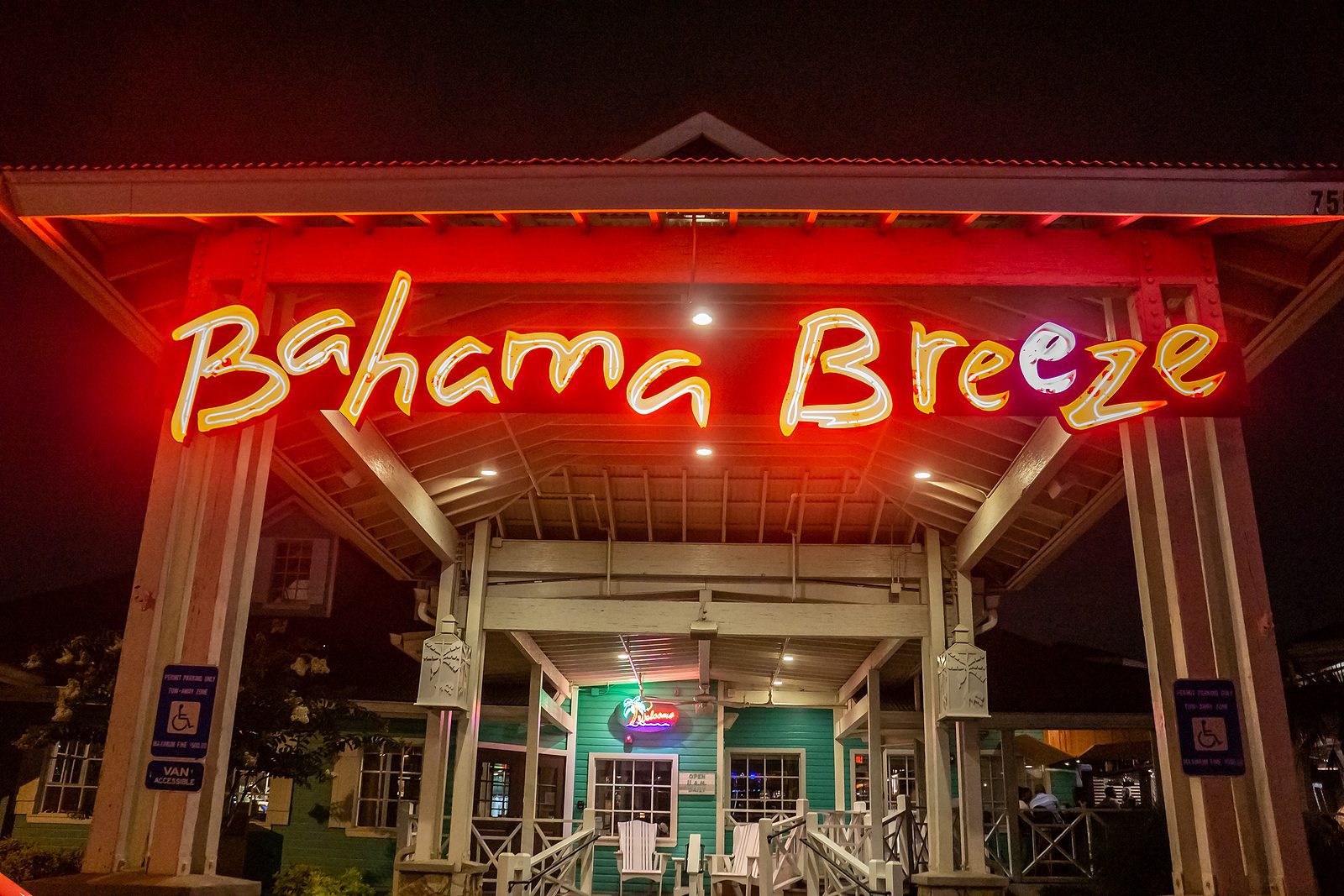
1. Bahama Breeze: A Restaurant Brand Being Eliminated
The most definitive example of a restaurant brand facing elimination is Bahama Breeze.
Unlike several other chains attempting to recover from financial difficulties, Bahama Breeze has been designated for discontinuation as a standalone restaurant concept.
On February 3, 2026, Darden Restaurants announced that it had completed a review of strategic alternatives for Bahama Breeze.
At the time, the brand had 28 restaurants.
Darden determined that Bahama Breeze was no longer a strategic priority.
The company announced plans to permanently close 14 restaurants and convert the remaining 14 locations into other Darden restaurant brands.
The locations designated for permanent closure were initially expected to continue operating through April 5, 2026.
Darden estimated that converting the remaining restaurants would take approximately 12 to 18 months from the February announcement.
That timetable extends into 2027.
The decision is particularly noteworthy because Bahama Breeze was part of a major national restaurant corporation.
Darden concluded that the concept no longer fit its long-term strategic priorities.
The company also stated that the planned closures and conversions were not expected to materially affect its overall financial results.
This distinction is important.
Bahama Breeze’s planned elimination does not mean Darden is financially distressed.
Instead, it demonstrates that a restaurant corporation may discontinue an established brand when management believes the underlying properties and resources can generate greater value under different concepts.
For consumers who enjoyed Bahama Breeze’s Caribbean-inspired menu and atmosphere, the result is the planned disappearance of a familiar restaurant identity.
For the restaurant industry, the decision illustrates that even an established concept supported by a major corporation can be discontinued.
The 2027 outlook: Darden’s announced conversion schedule extends into 2027, making Bahama Breeze the clearest example on this list of a brand being deliberately phased out.
Its No. 1 position reflects the announced corporate strategy, not a prediction of bankruptcy.
Why National Restaurant Chains Are Closing Locations
The financial difficulties facing these nine brands are not identical.
Some companies are experiencing declining comparable-restaurant sales.
Others face expensive leases, financially distressed franchise operators, restructuring obligations, or decisions to discontinue underperforming concepts.
Nevertheless, several common economic pressures help explain why restaurant closures remain an important industry issue.
Declining Customer Traffic
Restaurants depend on consistent customer traffic to generate enough revenue to cover operating expenses.
When fewer customers visit, sales can decline rapidly while many costs stay the same.
Consider a restaurant generating $40,000 in weekly revenue.
A sustained 10% decline in sales would reduce weekly revenue by $4,000.
Over 52 weeks, that represents approximately $208,000 in lost annual sales.
However, the restaurant would still need to pay rent, insurance, utilities, equipment expenses, and financing obligations.
Even a relatively modest decline in customer traffic can create substantial pressure on profitability.
Rising Operating Expenses
Restaurant expenses extend far beyond food purchases.
Payroll, payroll taxes, workers’ compensation insurance, property insurance, utilities, credit-card processing fees, equipment maintenance, and commercial rent all affect profitability.
When several expenses rise at once, restaurant operators may try to offset them by raising menu prices.
However, higher prices can discourage customers from visiting.
That creates a difficult financial situation.
Restaurants need additional revenue to cover expenses, but raising prices can reduce customer traffic.
The Financial Risks of Franchise Ownership
Many consumers assume that a restaurant displaying a national brand name is directly owned by the corporation associated with that brand.
In reality, many restaurants are independently owned franchise businesses.
Franchise operators may be responsible for rent, payroll, food purchases, financing obligations, royalties, and advertising contributions.
A franchise operator can experience severe financial distress even when the national restaurant brand remains financially viable.
The EYM Diner bankruptcy illustrates this distinction.
Similarly, closures involving individual Pizza Hut franchisees do not automatically establish that the entire Pizza Hut business is insolvent.
Understanding the difference between franchisor financial performance and individual franchisee finances is essential when evaluating restaurant-industry conditions.
Why Midpriced Restaurants May Be Especially Vulnerable
The restaurant industry is also experiencing changes in consumer spending behavior.
For many households, dining out is a discretionary expense competing with groceries, housing, insurance, transportation, and utilities.
When household budgets become strained, consumers may reduce restaurant visits or seek lower-priced alternatives.
A family that previously visited restaurants several times each week may begin dining out less frequently.
At the same time, some higher-income consumers may continue visiting upscale restaurants where they perceive greater quality, service, or a distinctive dining experience.
This can create an uneven marketplace.
Some expensive restaurants may remain busy while nearby midpriced establishments struggle.
The pattern is not universal, and restaurant performance varies considerably by market and customer demographics.
Nevertheless, it raises an important question for restaurant operators.
Are customers receiving enough perceived value to justify the price?
A restaurant can serve excellent food and still struggle if customers believe the total dining experience has become too expensive.
What This Means for St. Louis Restaurant Owners
The financial difficulties affecting national restaurant chains should concern independently owned restaurants throughout the St. Louis metropolitan area.
Local operators face many of the same economic pressures as national brands.
Restaurants in St. Louis, St. Louis County, St. Charles County, and surrounding communities must compete for consumers whose household budgets may already be under pressure.
Unlike large national chains, independent restaurants may lack substantial cash reserves, extensive purchasing agreements, and large advertising budgets.
They may also have fewer financing options when unexpected operating expenses arise.
However, independently owned restaurants can possess advantages that national corporations sometimes struggle to duplicate.
Local owners can adjust menus quickly, develop relationships with regular customers, respond directly to community preferences, and create distinctive dining experiences.
Some restaurants may benefit from introducing more affordable lunch offerings, simplifying menus, promoting daily specials, or strengthening direct online ordering.
Others may find opportunities when nearby national-chain locations close.
But attracting displaced customers takes more than staying open.
Restaurants must clearly communicate their value and give customers compelling reasons to return.
For St. Louis restaurant owners, the lesson from national closures is not necessarily that every restaurant must lower its prices.
It is that restaurant economics must be evaluated carefully.
Menu pricing, portion sizes, labor scheduling, marketing expenses, financing obligations, and customer traffic all contribute to long-term profitability.
A restaurant generating impressive sales but little available cash flow may be more financially vulnerable than a smaller business with consistent profitability.
Will 2027 Bring Another Wave of Restaurant Closures?
Documented developments in 2026 suggest restaurant restructuring will remain an important industry issue as 2027 approaches.
Jack in the Box has indicated that its closure program could extend into 2027 and 2028.
Darden’s announced Bahama Breeze conversions are expected to continue into 2027.
Noodles & Company has extended its credit facility maturity into November 2027 while continuing to evaluate strategic alternatives.
Other restaurant companies are attempting to improve profitability following substantial closures, ownership changes, or bankruptcy restructuring.
However, the number of future restaurant closures cannot be established with certainty.
Some companies may successfully stabilize their operations.
Others may transfer restaurants to stronger franchise operators, reduce expenses, or introduce more effective marketing strategies.
Restaurant closures can sometimes improve profitability by eliminating locations that consistently lose money.
Bankruptcy restructuring can also preserve viable businesses instead of eliminating them.
The industry’s future will depend on consumer demand, financing conditions, operating expenses, and individual companies’ ability to adapt.
For American consumers, that could mean fewer familiar restaurant locations in some communities and new concepts appearing in others.
For employees and franchise operators, the consequences can involve job losses, ownership changes, and difficult financial decisions.
For independently owned restaurants, the changing competitive landscape may create both additional risks and new opportunities.
The Bottom Line: Familiar Brands Are Not Guaranteed
The American restaurant industry is approaching 2027 with significant financial and operational challenges.
Wendy’s is attempting to reverse declining U.S. sales.
Noodles & Company is closing underperforming restaurants while addressing financing obligations.
Jack in the Box is implementing a restructuring program that could continue for several years.
Pizza Hut has undergone a major ownership transition after closing hundreds of U.S. restaurants.
Red Lobster and Hooters have experienced bankruptcy restructuring.
TGI Fridays operates a dramatically smaller domestic restaurant network but has announced new franchise development agreements.
A major Denny’s franchise operator entered Chapter 11 bankruptcy in November.
And Bahama Breeze is being eliminated as a standalone restaurant brand.
These developments do not establish that nine national restaurant chains will collapse in 2027.
They demonstrate that the American restaurant industry is undergoing substantial changes.
Some companies may recover. Others may become smaller. Additional restaurants may close as operators attempt to restore sustainable profitability.
The central lesson is that brand recognition alone cannot overcome persistent financial losses.
For restaurant owners, consistent customer traffic, disciplined expense management, manageable financing obligations, and customer value remain essential.
For consumers, the familiar restaurant landscape may continue changing.
And for the industry as a whole, 2027 could become another important year of restructuring, adaptation, and difficult financial decisions.
Sources
- The Wendy’s Company — Third Quarter 2026 Financial Results, November 5, 2026.
- Noodles & Company — Third Quarter 2026 Financial Results, November 13, 2026.
- Jack in the Box — Fiscal Third Quarter 2026 Filing.
- Yum Brands — Completion of Pizza Hut Sale, September 1, 2026.
- Fast Company — Pizza Hut Restaurant Closures, October 21, 2026.
- Restaurant Business — Red Lobster Restaurant Closures, September 8, 2026.
- Ropes & Gray — Hooters Bankruptcy Restructuring, November 3, 2025.
- Restaurant Dive — TGI Fridays Franchise Expansion, November 10, 2026.
- Restaurant Dive — Denny’s Franchisee Bankruptcy, November 5, 2026.
- Darden Restaurants — Bahama Breeze Strategic Review, February 3, 2026.
Editorial disclosure: This article is an independent restaurant-industry analysis based on publicly available corporate announcements, financial filings, franchise disclosure reporting, bankruptcy records, and industry reporting available through November 14, 2026. The countdown is an editorial presentation, not a statistical ranking of bankruptcy probabilities. Restaurant closures, franchisee bankruptcies, corporate restructuring, and companywide insolvency are distinct events. Inclusion does not imply that a restaurant company has filed for bankruptcy or will cease operating in 2027.

Martin Smith is the founder and Editor-in-Chief of St. Louis Restaurant Review, STL.News, USPress.News, and STL.Directory. He is a member of the United States Press Agency (ID: 31659) and the US Press Agency.