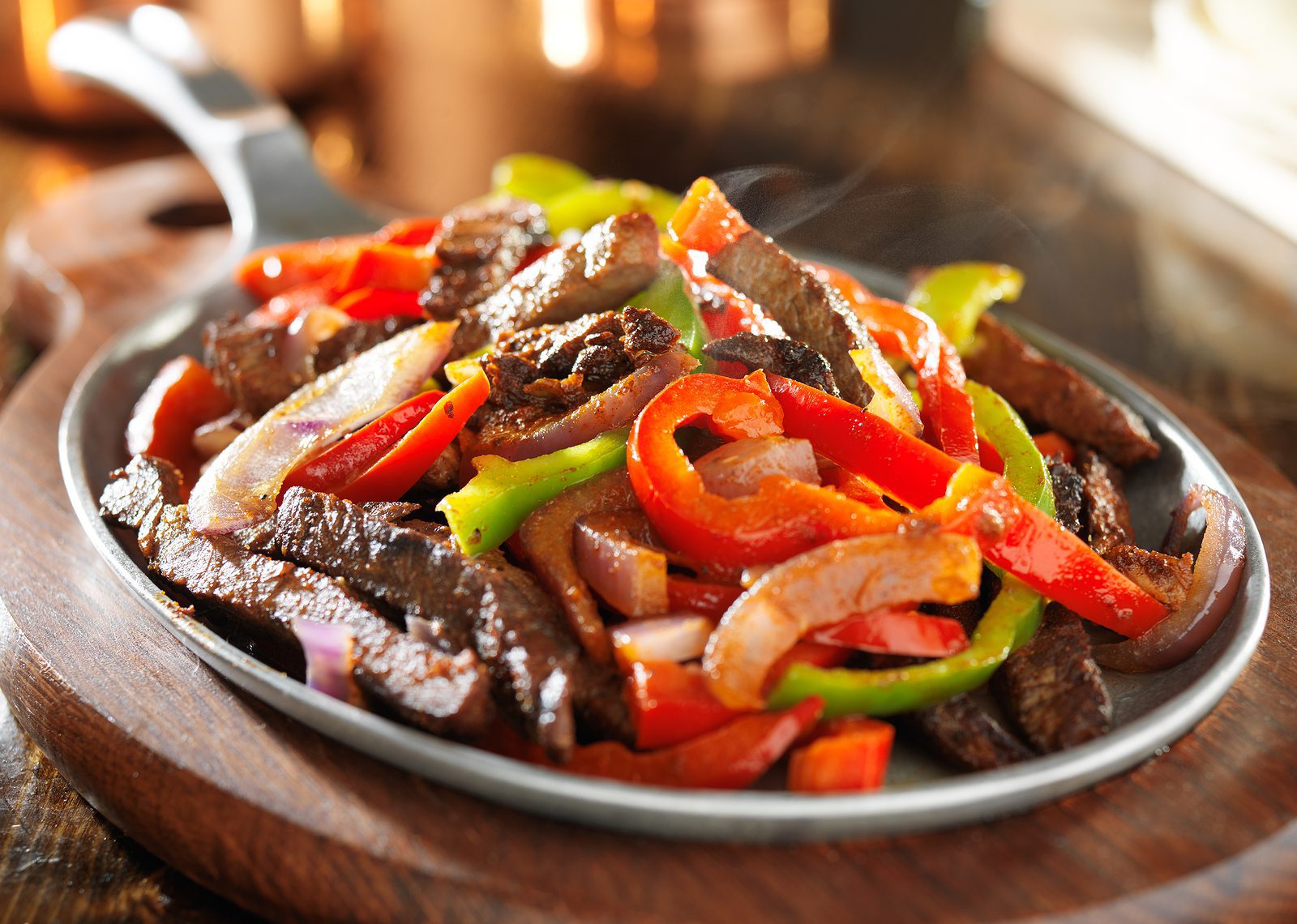
Restaurant closures, bankruptcies, and franchise restructuring reveal mounting financial pressure across America’s restaurant industry.
ST. LOUIS, MO – October 30, 2026 (StLouisRestaurantReview) America’s restaurant industry is approaching 2027 with significant financial challenges as some of the nation’s most recognizable restaurant chains close locations, restructure operations, and reconsider their long-term business strategies.
For decades, national restaurant chains represented stability, convenience, and predictable dining experiences. Their familiar signs appeared along highways, in shopping centers, and throughout suburban communities. Many became household names, supported by thousands of employees and franchise operators.
However, the economic realities facing restaurant operators have changed considerably.
Rising labor expenses, food costs, commercial rents, insurance premiums, borrowing costs, and increasingly price-conscious consumers have placed additional pressure on restaurant profitability. Some chains are responding by eliminating underperforming locations, while others have entered bankruptcy proceedings or substantially reduced their operating footprints.
The challenges extend beyond independent restaurants. Large chains with established brands, sophisticated marketing operations, and extensive franchise networks are also confronting difficult financial decisions.
The following nine restaurant chains illustrate different aspects of the industry’s ongoing restructuring. Their inclusion does not mean each company is bankrupt, insolvent, or expected to cease operations in 2027.
Instead, these companies illustrate the financial and operational pressures affecting the restaurant business.
9. Denny’s — A Familiar Brand Reduces Its Footprint
Denny’s has long occupied a recognizable position in American dining, offering traditional breakfast favorites, affordable meals, and extended operating hours.
However, the casual dining chain has faced challenges from aging restaurant locations, changing consumer preferences, and rising operating expenses.
The company previously announced a program to close approximately 150 underperforming restaurants by the end of 2025. Industry reporting indicates that the planned reduction was completed, although additional individual restaurant closures have subsequently been reported.
For a brand historically associated with convenience and accessibility, closing restaurants represents a significant adjustment.
The broader question entering 2027 is whether a smaller restaurant network, improved operating efficiency, and renewed customer engagement can support long-term competitiveness.
Denny’s experience also illustrates an important distinction: closing unprofitable restaurants can be part of a deliberate business improvement strategy rather than evidence of imminent corporate failure.
8. Pizza Hut — Competition Intensifies in the Pizza Industry
Pizza Hut has been one of America’s most recognizable pizza brands for generations.
Yet the pizza industry has become increasingly competitive, with traditional delivery chains competing against independent pizzerias, fast-casual concepts, convenience stores, and digital ordering platforms.
In 2026, Pizza Hut announced plans to close approximately 250 underperforming U.S. restaurants as part of its operational improvement efforts.
The strategy reflects the challenges of maintaining older locations that may no longer generate enough sales to justify their operating expenses.
Pizza Hut’s challenges also highlight how customer expectations have evolved.
Consumers increasingly expect convenient ordering, competitive pricing, delivery options, and consistent service. Restaurants that cannot deliver these experiences efficiently may struggle to maintain customer loyalty.
For franchise operators, profitability depends on more than brand recognition. Food costs, labor expenses, occupancy charges, royalties, advertising contributions, and delivery economics all influence the financial performance of individual locations.
Pizza Hut’s restructuring demonstrates how even established brands must continuously adapt.
7. Wendy’s — Hundreds of Restaurants Close
Wendy’s remains one of the largest quick-service restaurant brands in the United States.
Nevertheless, the company has closed many restaurants as it evaluates the performance of individual locations.
Industry reporting indicates that Wendy’s closed 289 U.S. restaurants during the first half of 2026.
These closures reflect an effort to improve the restaurant system’s overall health by eliminating locations that do not meet financial performance expectations.
The company’s situation illustrates the challenges facing franchise-based restaurant businesses.
A franchised restaurant may operate under a nationally recognized brand while remaining dependent on the financial resources and management decisions of an individual franchise owner.
Even when a corporate brand remains financially viable, particular franchisees may struggle with declining customer traffic, increasing wages, rising occupancy expenses, or insufficient operating margins.
For Wendy’s, the challenge entering 2027 involves strengthening restaurant-level profitability while maintaining the value proposition that attracts customers.
Closures alone do not establish that the company is approaching bankruptcy. They do, however, demonstrate the importance of sustainable restaurant economics.
6. Papa John’s — Restructuring Extends Into 2027
Papa John’s provides one of the clearest examples of restaurant restructuring directly extending into 2027.
The pizza chain announced plans to close approximately 300 North American restaurants by the end of 2027.
In its August 2026 regulatory filing, Papa John’s reported that 101 North American restaurants had closed during the first six months of the year under its restaurant portfolio improvement initiative.
The company explained that its restructuring efforts are intended to improve restaurant-level profitability, strengthen franchise operations, and reduce unnecessary expenses.
The broader transformation also includes investments in technology, supply-chain improvements, and operational efficiency.
Importantly, the company continues to operate an extensive restaurant network, and its restructuring program is designed to improve its business rather than terminate operations.
Nevertheless, the planned closures show how difficult the operating environment has become for certain franchise locations.
For consumers, the consequences may include fewer nearby restaurants or changes in delivery coverage. For franchise operators, the stakes can involve substantial investments in real estate, equipment, staffing, and brand-related obligations.
Papa John’s will remain an important company to monitor as its restructuring continues into 2027.
5. Red Lobster — Recovery After Bankruptcy
Red Lobster became one of the most prominent examples of financial distress in the restaurant industry when it filed for Chapter 11 bankruptcy protection in 2024.
The seafood chain subsequently emerged from bankruptcy under new ownership and began rebuilding its operations.
However, the process of improving the company’s restaurant portfolio has continued.
According to September 2026 industry reporting, Red Lobster’s U.S. restaurant count had declined to about 484 locations, down from 520 at the end of 2025.
The reductions included several longstanding restaurants.
Red Lobster’s experience demonstrates that emerging from bankruptcy does not automatically resolve every underlying operating problem.
Restaurant operators must still generate enough revenue to cover food purchases, labor, rent, utilities, insurance, maintenance, and other expenses.
Large dining rooms and full-service restaurant formats can create substantial fixed costs, particularly when customer traffic declines.
The seafood category also faces challenges involving ingredient pricing, supply-chain complexity, and customer perceptions of affordability.
For Red Lobster, the coming year represents another important stage in its recovery.
The company’s ability to retain customers, improve restaurant-level performance, and operate a financially sustainable network will help determine the success of its restructuring.
4. Bertucci’s — A Regional Chain Under Pressure
Bertucci’s, known for its Italian-American menu and brick-oven pizza, illustrates the difficulties facing regional casual dining brands.
The company has experienced substantial restaurant reductions and multiple bankruptcy proceedings over the years.
Its history reflects the challenges of maintaining a traditional casual dining model while competing with newer restaurant concepts and changing consumer habits.
Regional restaurant chains often face a difficult balance.
They may lack the purchasing power and advertising resources of larger national competitors while still carrying significant corporate overhead and operating expenses.
As locations close, the remaining restaurants must support a smaller overall business.
This can make restructuring particularly challenging when sales volumes are insufficient to cover administrative expenses and other fixed costs.
Bertucci’s shows how repeated financial difficulties can gradually reduce a restaurant brand’s market presence.
Its inclusion here reflects historical restructuring and contraction, not a verified prediction of another bankruptcy in 2027.
3. Bahama Breeze — A Brand Being Phased Out
Bahama Breeze represents a different type of restaurant industry restructuring.
Rather than a traditional bankruptcy situation, parent company Darden Restaurants announced a decision to discontinue the Bahama Breeze brand.
In February 2026, Darden said it would permanently close 14 Bahama Breeze restaurants and convert the remaining 14 locations into other concepts within its restaurant portfolio.
The company said the conversions would occur over about 12 to 18 months.
This decision demonstrates that even restaurant concepts owned by financially established corporations can lose their place within a company’s long-term strategy.
Restaurant corporations regularly evaluate whether individual brands offer sufficient growth potential, operational efficiency, and returns on investment.
When another concept offers better prospects, converting restaurant locations may become more attractive than maintaining the existing brand.
Bahama Breeze’s situation is especially significant because the decision involves the future of the entire restaurant concept rather than a limited number of poorly performing locations.
However, it would be inaccurate to describe Darden Restaurants itself as collapsing.
The decision concerns a specific brand within a larger restaurant company.
2. TGI Fridays — A Dramatic Decline in U.S. Restaurants
TGI Fridays was once among the most recognizable names in American casual dining.
Its restaurants became known for their bar-oriented atmosphere, appetizers, cocktails, and traditional American menu offerings.
However, the brand’s U.S. presence has declined dramatically.
After bankruptcy proceedings in 2024, the company underwent substantial restructuring and closed many restaurants.
According to September 2026 reporting based on an amended franchise disclosure document, TGI Fridays had declined to approximately 71 U.S. restaurants after additional closures during the year.
The same reporting indicated that its remaining U.S. restaurants were franchise-operated.
The decline illustrates how quickly a familiar restaurant brand can lose market share when financial and operational challenges accumulate.
TGI Fridays has also faced competition from independent restaurants, sports bars, fast-casual operators, and other casual dining chains.
The challenge is not simply attracting customers.
Restaurants must attract enough customers at prices that generate sustainable margins after accounting for all operating expenses.
A restaurant can remain popular with some customers while still struggling financially.
For TGI Fridays, the smaller operating footprint raises important questions about brand positioning, franchise economics, and future expansion opportunities.
The company’s history provides a cautionary example of the vulnerability of established casual dining brands.
1. On the Border — One of the Most Dramatic Contractions
On the Border Mexican Grill & Cantina ranks first because of the dramatic reduction in its U.S. restaurant footprint.
The Tex-Mex restaurant chain, founded in Dallas in 1982, once operated a substantial network of restaurants nationwide.
Its menu of fajitas, margaritas, enchiladas, and other Mexican-inspired dishes made it a familiar casual dining destination.
However, the company experienced years of declining sales and restaurant closures.
Following bankruptcy proceedings and an ownership transition, On the Border continued evaluating its operating model.
In June 2026, the company announced the closure of its company-owned restaurants.
Industry reporting indicated that approximately 27 restaurants closed in that round, leaving only five franchised U.S. locations.
The company stated that independently operated franchise locations would remain open while management evaluated strategic alternatives for the brand.
This contraction represents one of the most striking examples of a formerly widespread restaurant chain shrinking to a small fraction of its historical presence.
The decline also illustrates how difficult it can be to reverse long-term financial deterioration.
Once restaurant closures begin accelerating, a company may face additional challenges involving brand visibility, purchasing relationships, employee retention, and customer confidence.
On the Border’s future remains uncertain, but its documented contraction makes it a particularly important example of the challenges affecting traditional casual dining.
The ranking does not establish that the remaining franchise restaurants will close in 2027.
Why Are So Many Restaurant Chains Struggling?
Although these nine restaurant brands face different circumstances, several economic pressures appear repeatedly throughout the industry.
Food and supply costs: Restaurant operators must manage fluctuating ingredient prices, transportation expenses, packaging costs, and supplier contracts. Even relatively small increases can substantially affect profitability when operating margins are narrow.
Labor expenses: Wages, employee benefits, payroll taxes, training, and turnover all influence restaurant operating costs. Maintaining appropriate staffing levels while controlling labor expenses has become an increasingly important management challenge.
Commercial rent and occupancy costs: Restaurant leases can create substantial fixed obligations. Beyond base rent, many operators pay common-area maintenance charges, property taxes, insurance reimbursements, and other expenses through commercial lease arrangements.
Consumer spending: Households facing higher living expenses may visit restaurants less, choose less expensive meals, or cook at home more often. These changes can reduce customer traffic even when restaurants maintain competitive pricing.
Franchise economics: Franchise operators often pay royalties, advertising contributions, technology fees, and other brand-related expenses. These costs must be supported by restaurant-level revenue and profitability.
Debt and financing: Restaurants with significant borrowing obligations may face additional financial pressure when interest expenses rise, or refinancing becomes more difficult.
Technology and delivery: Online ordering, third-party delivery, digital marketing, and customer loyalty programs create opportunities but also require investment. Delivery commissions and related expenses can reduce profitability if not managed carefully.
These pressures do not affect every restaurant equally.
Some operators continue expanding, increasing sales, and generating strong financial results. Others face substantial difficulties because of weak locations, outdated concepts, excessive expenses, or insufficient customer demand.
The restaurant industry is therefore experiencing a period of adjustment rather than a uniform collapse.
What This Means for Independent Restaurants
The financial difficulties facing major chains have implications for independently owned restaurants throughout the United States, including the St. Louis metropolitan area.
Independent restaurants often operate without the financial resources, purchasing agreements, and advertising budgets available to national brands.
They may also depend heavily on individual owners who personally manage staffing, customer service, purchasing, marketing, and financial administration.
These responsibilities can become especially challenging during periods of economic uncertainty.
However, independent restaurants may possess certain advantages.
They can often respond more quickly to local customer preferences, adjust menus, develop community relationships, and distinguish themselves through personal service.
Their long-term success still depends on careful financial management.
Restaurant owners must understand their actual food costs, labor percentages, occupancy expenses, cash flow, debt obligations, and profitability.
Revenue growth alone does not guarantee financial success.
A busy restaurant can still lose money if its expenses exceed the revenue generated by its customers.
The contraction of major restaurant chains reinforces an important lesson: brand recognition and customer popularity cannot substitute for sustainable operating economics.
What Restaurant Owners and Consumers Should Watch in 2027
As the industry approaches 2027, several developments deserve continued attention.
Restaurant operators will be watching customer traffic, food costs, labor expenses, borrowing conditions, and the financial performance of franchise locations.
Consumers may notice more restaurant closures, smaller menus, new promotions, changes in operating hours, and greater emphasis on digital ordering.
Some chains may continue reducing their footprints while others invest in remodeling, technology, or expansion.
Certain brands may also emerge from restructuring with stronger operating models.
A restaurant closure should not automatically be interpreted as evidence that an entire company is failing.
Corporate restructuring, franchise consolidation, restaurant conversions, and bankruptcy proceedings have different meanings and financial consequences.
Understanding those distinctions is essential when evaluating the health of the restaurant industry.
Conclusion: An Industry Facing Difficult Decisions
The restaurant industry remains one of America’s most competitive business sectors.
For major chains and independent operators alike, success increasingly depends on controlling expenses, attracting customers, maintaining service standards, and adapting to changing economic conditions.
The experiences of Denny’s, Pizza Hut, Wendy’s, Papa John’s, Red Lobster, Bertucci’s, Bahama Breeze, TGI Fridays, and On the Border demonstrate how different restaurant companies are responding to financial and operational challenges.
Some are closing underperforming locations. Others have undergone bankruptcy restructuring. Still others are discontinuing brands or reconsidering their operating strategies.
None of these developments establishes that all nine chains will collapse in 2027.
However, they demonstrate the significant financial pressure affecting portions of the restaurant industry.
For St. Louis Restaurant Review, these national developments provide important context for understanding the challenges facing restaurants throughout Missouri and across the country.
The central question entering 2027 is not simply which restaurants will close.
It is which restaurant operators can build sustainable businesses in an increasingly demanding economic environment.
Editorial Disclaimer and Information Verification Notice
Important Disclaimer: The information contained within the accompanying video and its transcript has not been independently verified by St. Louis Restaurant Review. The video and transcript are presented for general informational, educational, and industry-awareness purposes only.
St. Louis Restaurant Review recognizes that significant financial pressure exists throughout the American restaurant industry, including among major restaurant chains, franchise operators, and independently owned establishments.
However, St. Louis Restaurant Review does not guarantee the accuracy, completeness, reliability, or timeliness of the data, statements, statistics, projections, rankings, or other information contained in the accompanying video or transcript.
Any statements regarding potential restaurant closures, bankruptcies, financial distress, or future business performance should not be interpreted as confirmed predictions or guarantees of future events.
Including a restaurant chain in this article or the accompanying video does not necessarily indicate that the company is insolvent, bankrupt, permanently closing, or expected to cease operations in 2027.
Readers are encouraged to consult official company announcements, regulatory filings, court records, and other authoritative sources before relying on specific financial or operational claims.
This content is provided solely to encourage informed discussion and awareness of the economic challenges facing the restaurant industry.
Sources and Research: Restaurant Dive, Restaurant Business, Nation’s Restaurant News, Fast Company, CBS News, corporate announcements from Darden Restaurants, and Papa John’s regulatory filings. The article incorporates information available through October 30, 2026. Future developments, individual restaurant operating status, and any underlying video or transcript claims have not been comprehensively verified.

Martin Smith is the founder and Editor-in-Chief of St. Louis Restaurant Review, STL.News, USPress.News, and STL.Directory. He is a member of the United States Press Agency (ID: 31659) and the US Press Agency.