From the crowded streets of Naples to neighborhood restaurants in St. Louis, pizza’s remarkable history shows how an inexpensive working-class meal became one of the world’s most beloved foods.
ST. LOUIS, MO – October 31, 2026 (StLouisRestaurantReview) Few foods have achieved the international recognition, popularity, and cultural influence of pizza. From family-owned neighborhood restaurants to international restaurant chains, pizza has become a familiar part of everyday life across much of the world.
Yet pizza’s history begins far from the enormous restaurant industry it supports today.
Modern pizza developed among the working-class population of Naples, Italy, where inexpensive ingredients, simple preparation, and practical cooking methods helped create a meal that could feed people struggling to survive.
What began as affordable street food eventually crossed the Atlantic, became a cornerstone of American dining, and developed into numerous regional varieties, including the distinctive thin-crust pizza St. Louis residents recognize today.
The story of pizza is more than a food history. It is a story about immigration, poverty, entrepreneurship, changing consumer tastes, and the extraordinary ability of simple ideas to become international traditions.
Before Pizza: The Ancient History of Flatbread
Although modern pizza is closely associated with Naples, the concept of placing ingredients on bread dates back thousands of years.
Ancient civilizations throughout the Mediterranean prepared various forms of flatbread. The Greeks, Romans, and other peoples used bread as a convenient meal base, sometimes adding herbs, oils, and other available ingredients.
These early flatbreads were not necessarily pizza in the modern sense. They lacked the combination of ingredients, preparation methods, and culinary traditions that would eventually distinguish Neapolitan pizza.
Nevertheless, they established an important principle: bread could serve as both a food and a convenient base for additional ingredients.
Flatbread was particularly practical because grain-based foods were often more accessible than meat. Bread could provide calories, could be prepared in substantial quantities, and could be combined with whatever ingredients a household could afford.
Across centuries, different cultures developed their own versions of topped or filled breads.
The transformation from these ancient preparations to recognizable modern pizza, however, occurred much later.
That transformation took place in southern Italy.
Naples: Where Poverty Helped Create Modern Pizza
During the 1700s and early 1800s, Naples was a densely populated Mediterranean port city with substantial economic inequality.
Its working-class residents included laborers, porters, street vendors, and people who survived through irregular employment.
Many households lived in crowded conditions, and daily life frequently revolved around finding enough work to purchase food.
For these residents, meals needed to satisfy several requirements.
They had to be inexpensive, filling, quick to prepare, and easy to eat.
Pizza met those needs.
Early Neapolitan pizza could be prepared using basic bread dough and modest toppings. Depending on availability and cost, these might include oil, garlic, herbs, tomatoes, anchovies, or cheese.
Unlike the elaborate meals of wealthy households, pizza did not require expensive cuts of meat or many ingredients.
People could also buy it from street vendors and eat it without the formal setting of a restaurant.
For workers who spent long hours away from home, this convenience was particularly valuable.
Pizza was not initially regarded as a prestigious culinary achievement. Its association with Naples’ poorer residents meant some outside observers viewed it as undesirable or unsophisticated.
Yet its popularity among local residents kept growing.
Food historian Carol Helstosky, author of Pizza: A Global History, has documented pizza’s development from an inexpensive Neapolitan food into a major part of American dining culture.
The circumstances surrounding its creation reveal an important truth about food history: some of the world’s most successful dishes emerged not from luxury, but from necessity.
The Tomato Changed Pizza Forever
One of the most important developments in pizza’s history was the introduction of tomatoes into European cooking.
Tomatoes originated in the Americas and reached Europe following transatlantic contact beginning in the late 15th century.
Their acceptance into European diets developed gradually and varied across regions.
Eventually, tomatoes became an important ingredient in southern Italian cooking.
For pizza makers, tomatoes offered several advantages.
They provided flavor, moisture, acidity, and color while remaining relatively inexpensive when locally available.
Combined with bread dough, olive oil, garlic, and other seasonings, tomatoes helped create the recognizable foundation of modern pizza.
By the late 18th and early 19th centuries, Naples had developed a growing culture of professional pizza makers and establishments dedicated to preparing the dish.
Historical records examined by the Associazione Verace Pizza Napoletana, an organization devoted to traditional Neapolitan pizza, document pizza-making activity during this period.
The organization’s historical account cites an 1807 census identifying 55 pizzerias in Naples, showing that pizza had already become an established commercial trade.
Pizza was becoming more than a convenient meal.
It was becoming a business.
The Pizza Margherita and the Royal Legend
One of pizza’s most famous stories involves Queen Margherita of Italy.
According to the traditional account, Queen Margherita and King Umberto I visited Naples in 1889.
The story holds that a local pizza maker, Raffaele Esposito, prepared several pizzas for the royal visitors.
One reportedly featured tomatoes, mozzarella, and basil, representing the red, white, and green colors of the Italian flag.
The queen supposedly enjoyed that combination, and the pizza became associated with her name.
Today, Pizza Margherita remains one of the best-known examples of traditional Neapolitan pizza.
However, this familiar account should not be mistaken for a fully settled historical record.
Food historians have questioned parts of the royal story, and documentary evidence suggests similar pizzas existed before the reported 1889 visit.
The historical importance of the Margherita therefore does not depend on proving that one chef invented the combination for one queen.
Instead, the story demonstrates how a relatively simple working-class dish became associated with Italian national identity and eventually gained international prestige.
The ingredients themselves remain remarkably uncomplicated: dough, tomatoes, mozzarella, basil, and olive oil.
Their appeal illustrates how careful preparation can turn inexpensive ingredients into an enduring culinary tradition.
Italian Immigration Brings Pizza to America
Pizza’s transformation into a major American food was closely connected to Italian immigration.
During the late 19th and early 20th centuries, many Italians migrated to the United States.
Many settled in cities such as New York, Chicago, Philadelphia, and other industrial communities with available employment opportunities.
Immigrants brought their languages, religious traditions, family customs, and regional cuisines.
Pizza traveled with them.
At first, pizza stayed closely tied to Italian immigrant neighborhoods.
Small bakeries, groceries, and food establishments prepared familiar dishes for customers who already understood their appeal.
Over time, Americans outside those communities began discovering pizza.
The development of commercial pizzerias helped make the food accessible to a wider population.
New York City became particularly influential in this transition.
Lombardi’s, associated with Gennaro Lombardi, is commonly credited as an early American pizzeria, with a widely cited establishment date of 1905.
Although historical accounts distinguish between early pizza sales and the precise origins of individual businesses, New York’s Italian immigrant communities clearly played a central role in introducing pizza to American consumers.
As pizza became more familiar, it also began changing.
American customers developed different expectations regarding portion sizes, toppings, crust textures, and serving styles.
The process of adapting an immigrant food to a broader consumer market had begun.
World War II Helped Expand Pizza’s Popularity
Pizza’s growth in the United States accelerated during the decades surrounding and following World War II.
American military personnel stationed in Italy encountered regional Italian foods, including pizza.
Returning service members helped increase awareness of Italian cuisine, although pizza was already established in several American cities before the war.
The postwar economic environment also encouraged restaurant expansion.
Growing suburbs, increased automobile ownership, changing family routines, and a developing consumer culture created opportunities for convenient dining.
Pizza fit these changing lifestyles particularly well.
It could feed several people, be customized with different toppings, and suit informal gatherings.
Families could enjoy pizza without the expense or formality associated with traditional restaurant dining.
As demand increased, entrepreneurs opened pizzerias throughout the country.
Pizza was no longer primarily an Italian immigrant specialty.
It was becoming mainstream American food.
How Pizza Became a Major Restaurant Industry
The expansion of pizza restaurants during the second half of the 20th century fundamentally changed the industry.
Independent pizzerias remained important, but larger businesses recognized opportunities to standardize production, establish recognizable brands, and expand through multiple locations.
Pizza Hut began in Wichita, Kansas, in 1958.
Little Caesars was founded in Michigan in 1959.
Domino’s began in Michigan in 1960.
These companies helped popularize different approaches to pizza service, including family dining, carryout, franchising, and delivery.
Restaurant operators also benefited from pizza’s relative simplicity.
A limited set of core ingredients could produce many different menu combinations.
Operators could organize dough, sauce, cheese, and toppings into repeatable preparation systems.
This flexibility made pizza suitable for both small independent operations and larger restaurant organizations.
However, the industry’s success was not based solely on production efficiency.
Pizza also became closely associated with social experiences.
Birthday parties, sporting events, family gatherings, workplace lunches, and casual evenings at home frequently involved pizza.
The meal’s ability to accommodate groups became one of its greatest commercial advantages.
America Develops Its Own Regional Pizza Traditions
As pizza spread throughout the United States, regional differences became increasingly pronounced.
New York-style pizza became known for its relatively large slices and thin, foldable crust.
Chicago developed its famous deep-dish pizza, featuring a substantial crust and generous layers of ingredients.
Detroit-style pizza gained recognition for its rectangular shape, airy interior, and crisp edges.
Other communities developed distinctive preparations based on local preferences, available ingredients, and restaurant traditions.
These regional styles demonstrate that American pizza did not develop through one uniform process.
Instead, restaurant owners adapted the original Italian concept to their communities’ tastes.
Among the most distinctive examples is St. Louis-style pizza.
St. Louis Creates Its Own Pizza Identity
For residents of the St. Louis metropolitan area, pizza has a regional identity that differs considerably from the traditional Neapolitan pie.
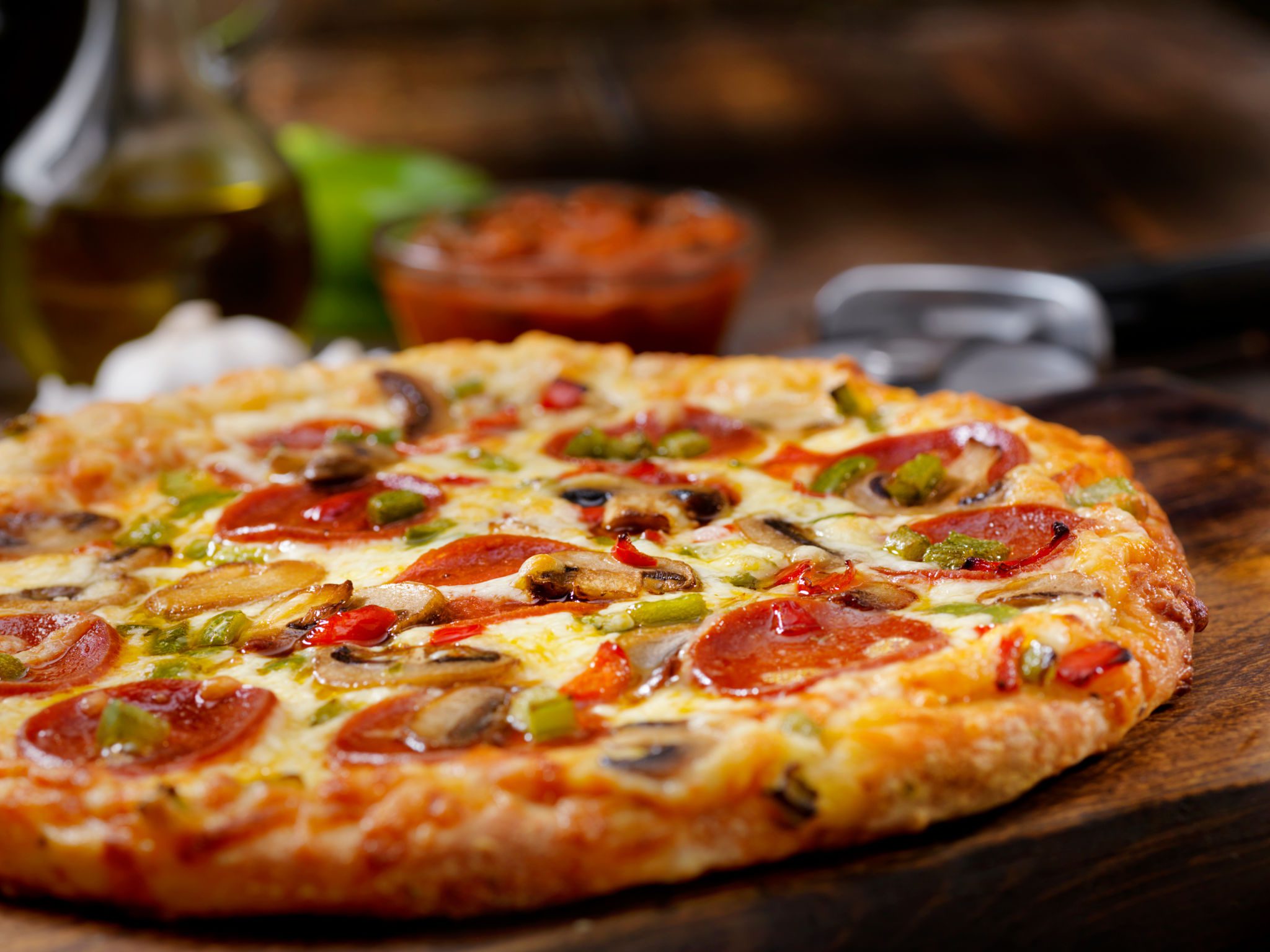
St. Louis-style pizza is generally characterized by a very thin, crisp crust, square-cut portions, and the frequent use of Provel cheese.
Unlike the soft, raised edges associated with Neapolitan pizza, the St. Louis version emphasizes a cracker-like texture.
The square-cut serving method, sometimes described as a party cut, produces smaller pieces that are convenient for sharing.
Provel, a processed cheese product associated with the St. Louis region, contributes a distinctive flavor and melting quality.
The combination creates a style many local residents immediately recognize.
One of the best-known businesses associated with this tradition is Imo’s Pizza.
According to the company’s published history, Ed and Margie Imo opened their first pizza parlor in 1964 in St. Louis’s Hill neighborhood.
The business began with limited equipment and modest financial resources.
Its early operations depended heavily on family participation, and the company gradually expanded throughout the region.
Imo’s history notes that an early chef introduced Provel cheese into the restaurant’s pizza preparation, helping establish a signature feature of the brand.
Although Imo’s did not invent every characteristic of St. Louis-style pizza, the company played an important role in popularizing the style.
Other regional pizza businesses, including Cecil Whittaker’s, which traces its beginnings to 1983, helped expand the availability of St. Louis-style pizza.
Today, the city’s pizza traditions illustrate how a food originating in another country can become an important part of local identity.
Why Independent Pizzerias Remain Important
Despite the growth of national and international chains, independently owned pizzerias remain an important part of the restaurant industry.
Their appeal often comes from characteristics that are difficult to reproduce through large-scale standardization.
Independent operators can develop proprietary dough recipes, experiment with sauces, choose unusual toppings, and adjust menus to customer preferences.
Some emphasize traditional Italian preparation methods.
Others focus on regional American styles or create combinations that reflect the neighborhoods they serve.
Independent pizzerias also frequently develop strong relationships with their customers.
A neighborhood pizza restaurant may serve the same family for several generations.
Employees learn regular customers’ preferences, and the restaurant becomes part of the community’s routine.
This relationship between food and community has been central to pizza’s history from the beginning.
In Naples, pizza served the daily needs of working residents.
In American neighborhoods, independently owned pizzerias continue serving families, workers, and local communities.
The ingredients and equipment may have changed, but the underlying purpose remains familiar.
Pizza Becomes a Global Food
Pizza’s international expansion continued as American restaurant chains entered overseas markets and Italian cuisine gained broader global recognition.
Today, pizza is available in numerous countries, with regional variations reflecting local ingredients and cultural preferences.
Some markets favor seafood toppings.
Others incorporate vegetables, sauces, spices, or meats associated with their own culinary traditions.
The basic concept is flexible enough to accommodate these differences without losing its recognizable identity.
Pizza’s global appeal also reflects its suitability for different business models.
Street vendors, neighborhood restaurants, full-service establishments, delivery operations, supermarkets, and international chains can sell it.
It can be inexpensive everyday food or a carefully prepared specialty using premium ingredients.
This range is unusual.
Few dishes move so easily between convenience dining and high-end culinary presentation.
Pizza’s history demonstrates that commercial success does not necessarily require abandoning traditional roots.
Instead, the dish has succeeded partly because it can preserve recognizable elements while adapting to new markets.
Traditional Neapolitan Pizza Receives International Recognition
As pizza became increasingly global, efforts to preserve its original Neapolitan traditions gained importance.
Traditional Neapolitan pizza emphasizes specific preparation methods, dough handling techniques, ingredients, and cooking practices.
The Associazione Verace Pizza Napoletana was established in 1984 to promote and protect authentic Neapolitan pizza traditions.
Another important milestone occurred in 2017, when UNESCO inscribed the Art of Neapolitan Pizzaiuolo on its Representative List of the Intangible Cultural Heritage of Humanity.
The recognition concerned the traditional knowledge, craftsmanship, and cultural practices of Neapolitan pizza makers rather than declaring every form of pizza a protected cultural artifact.
The distinction matters.
Pizza is simultaneously a traditional craft and a constantly evolving commercial food.
Its history includes both preserving established techniques and developing new styles.
What Pizza’s History Teaches the Restaurant Industry
Pizza offers a compelling example of how restaurant businesses can grow from simple beginnings.
Its original appeal was based on affordability, convenience, and satisfying food.
Those characteristics remain commercially important.
Pizza’s success also illustrates the value of adaptability.
A food developed for working-class consumers in Naples became popular among American immigrant communities, expanded into suburban restaurants, and eventually developed into a worldwide industry.
Along the way, entrepreneurs introduced delivery systems, new restaurant formats, regional recipes, and increasingly sophisticated production methods.
Yet the fundamental product remains familiar.
Bread, sauce, cheese, and toppings continue to form the foundation of countless pizza meals.
For independent restaurant owners, this history offers a valuable perspective.
A successful food business does not always begin with expensive ingredients, an elaborate menu, or a luxury dining environment.
It can begin with understanding what customers need and preparing a relatively simple product consistently well.
Pizza also demonstrates the importance of regional identity.
St. Louis-style pizza is successful in part because it represents a local tradition that residents recognize and support.
The same principle applies to neighborhood pizzerias throughout the country.
Restaurants that establish meaningful connections with their communities can become more than places to purchase food.
They can become institutions.
From the Streets of Naples to the Tables of the World
Pizza’s history is remarkable because it transformed across countries, generations, and economic conditions.
A meal associated with Naples’ poorer residents became an important part of Italian culinary identity.
Italian immigrants carried the tradition to the United States, where independent entrepreneurs introduced pizza to new audiences.
American restaurant operators developed regional styles, delivery systems, and national brands that helped make pizza a familiar meal nationwide.
International expansion then carried pizza into markets far beyond its original Mediterranean home.
In St. Louis, the story took another distinctive turn as local restaurants developed and popularized their own interpretation.
Today, a customer can choose between traditional Neapolitan pizza, New York-style slices, Chicago deep-dish, Detroit-style squares, or St. Louis-style thin crust.
Each represents a different chapter in the evolution of the same basic food.
Perhaps the most enduring lesson is that pizza never lost the simplicity that made it successful in the first place.
What began as an affordable way to feed working people became a food enjoyed across cultures and economic classes.
Pizza conquered the world not because it began as a luxury, but because ordinary people could afford it, enjoy it, and make it their own.
Editorial Note: This article is an independently written historical and informational feature. It is not a transcript or reproduction of a YouTube video. Historical accounts and traditions are distinguished from documented facts where appropriate.

Martin Smith is the founder and Editor-in-Chief of St. Louis Restaurant Review, STL.News, USPress.News, and STL.Directory. He is a member of the United States Press Agency (ID: 31659) and the US Press Agency.